



Wednesday, 23 September 2026 01:10 AM
Company Update
A unanimous Federal Open Market Committee lifts the benchmark rate to a range of 3.75% to 4%, as stubborn consumer inflation, an energy shock born of the Iran conflict and open White House pressure reshape the outlook for investors.
SINGAPORE, SG / ACCESS Newswire / September 23, 2026 / The Federal Reserve raises its benchmark by a quarter of a point to a range of 3.75% to 4%, on a unanimous vote. Burghley Capital reads the move as the most consequential turn in policy since the post-pandemic inflation peak of 9.1%, with consumer prices now at 3.7% against 2.3% some fifteen months earlier. Disruption from the Iran conflict compounds the difficulty, sharpening energy volatility and lifting average petrol prices more than 7% over recent weeks.
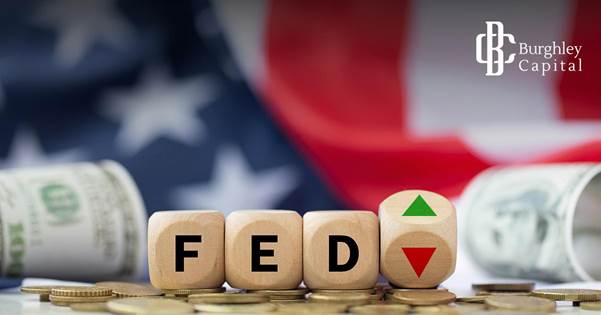
The Committee's first tightening action in more than three years reverses course, with eleven earlier adjustments yet to suppress inflation. Its preferred inflation gauge registers a six-month change of 4.1%, and sixteen of eighteen participants anticipate at least one further quarter-point increase over the remainder of the year. Accompanying projections point to growth of 2.3% over the coming year and 2.4% the year after, with core inflation at 3.4%.
Chairman Kevin Warsh declines to submit individual forecasts, holding that forward guidance constrains the flexibility conditions demand. He describes inflation as too high and as having been so for far too long, attributing sixty-five months of it directly to the central bank's own decisions. Hard data sits behind that judgement: 54% of goods and services in the price basket register increases above 3% over the preceding year, against a pre-pandemic average of 32%.
Burghley Capital's Senior Vice President, Joseph Campbell, reads the 12-0 vote as "a signal that the Committee accepts the cost of restoring credibility in place of the cost of delay." The decision amounts to a test of institutional resolve rather than a routine calibration of policy. That distinction changes the assumptions underneath duration, credit spreads and equity risk premia, since a central bank willing to tolerate slower growth puts a different price on risk.
Political pressure intensifies within hours, as President Donald Trump posts on Truth Social demanding that rates fall to 1% or less. He argues that a country with the best credit in the world warrants immediate relief, and confirms discussing the vote with Warsh beforehand. The Committee, which he characterises as a body of politicians, draws its independence from statute, under which governors may be removed only for cause.
History supplies a sobering precedent for what follows when political pressure overrides monetary discipline. Interference with Chairman Arthur Burns during the Nixon administration produced a permanent increase in the American price level of more than 8%, while Paul Volcker's readiness to raise rates sharply restored credibility. Campbell frames the standoff as a variable portfolios must now price directly, noting that "political interference is no longer a tail risk in rate forecasting; it is an input."
Confrontation between the United States and Iran generates acute stress across energy markets, where any closure of the Strait of Hormuz, carrying 20% of global oil supplies, would present a shock monetary policy alone cannot address. Modelling suggests a shortfall of 15 million barrels a day would drive West Texas Intermediate to $103.2 a barrel over a two-month window. Headline inflation would rise 1.7 percentage points at annualised rates in the quarter following, while a complete 20% disruption could push crude to $183.3 a barrel.
Instability across global supply chains exacts a further cost of $201.9 billion annually, driven by raw material volatility and elevated logistics expenditure. American tariffs of up to 145% on certain Chinese imports meet retaliatory measures of up to 125%, and such shocks drive as much as 28% of inflation variation over the following one to two years. Government bond yields climb alongside oil, and Moody's downgrade of the United States sovereign rating from AAA compounds the pressure.
Credit card rates climb from approximately 16% five years ago to above 22% now, while mortgage costs move from below 4% to above 7% over a matter of months. The latest increase adds $1.5 a month to minimum payments on an average balance of $7,253.4. Corporate investment resists the squeeze, since Goldman Sachs analysis confirms capital deployment tied to artificial intelligence remains robust, with S&P 500 earnings growth of 30% last quarter.
Hyperscalers are on course to deploy $877.9 billion of capital expenditure annually, with forecasts reaching $1.3 trillion over the year ahead. Fixed income carries the heavier burden, since a portfolio with a duration of one year faces a potential 1% loss for every 100-basis-point rise. Dividend-paying equities and Treasuries attract flows while conditions tighten, and maximum drawdowns on the S&P 500 exceed 10% within a year of a first increase.
Rate cycles reward preparation more reliably than prediction, a lesson written into every previous tightening episode. Campbell places the emphasis on sequencing, arguing that "the portfolios that come through a tightening cycle intact are the ones rebalanced before the second rise, not after it." Burghley Capital's reading of the cycle points to duration management, asset resilience and long-term continuity planning as the areas of most immediate consequence for institutional and sophisticated private investors.
About Burghley Capital
Founded in 2017 and headquartered in Singapore, Burghley Capital Pte. Ltd. (UEN:201731389D) is a leading global investment management firm recognised for its depth of expertise in long-only asset management. The firm builds strategic advantage through rigorous analysis, bespoke investment approaches and dedicated advisory services, pursuing strong returns and lasting resilience for institutional and private clients worldwide. Further insights are available at https://burghleycapital.com/resources. Media enquiries may be directed to Martin Wei at [email protected] or via https://burghleycapital.com.
Company Information
Company: Burghley Capital
Name: Martin Wei
Email: [email protected]
Address: Singapore
Website - https://burghleycapital.com
SOURCE: Burghley Capital